
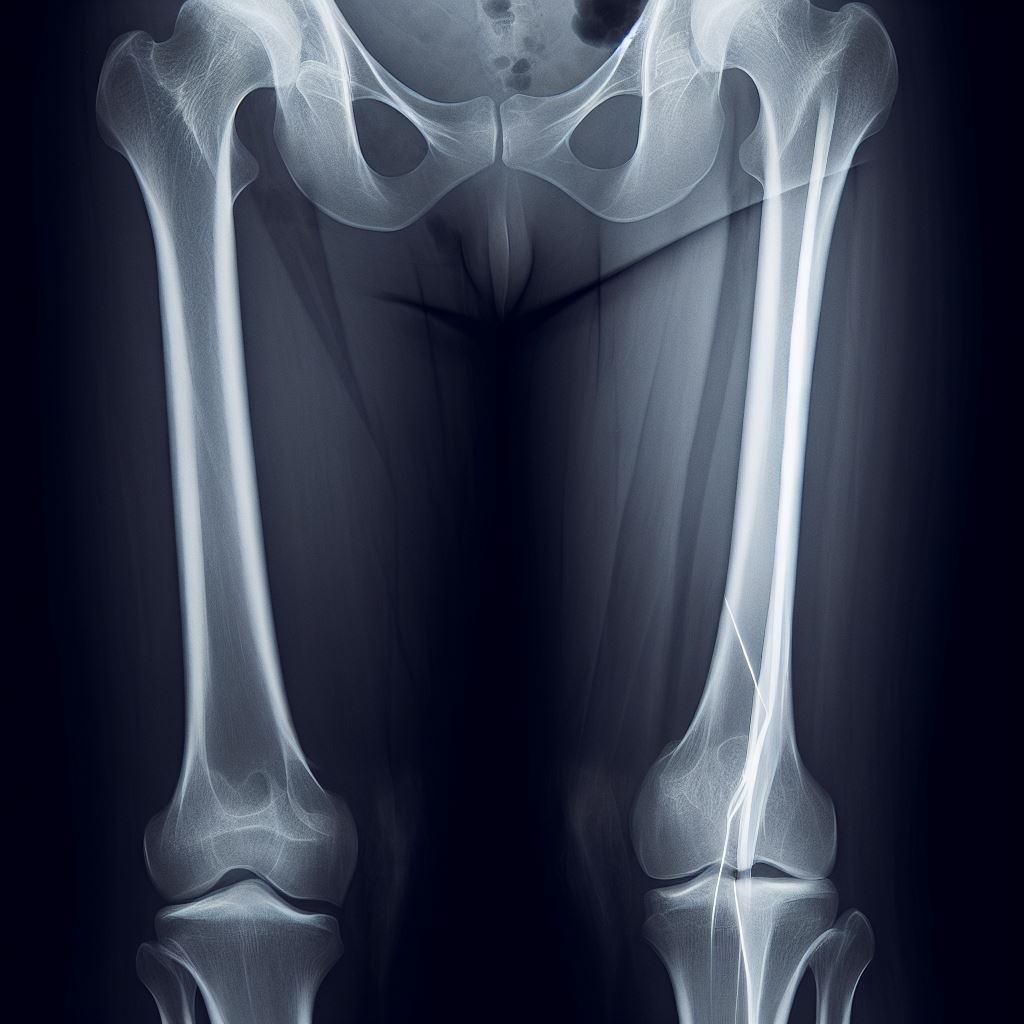
Atypical femoral fractures are rare complications that can arise from prolonged use of anti-resorptive osteoporosis treatments, such as bisphosphonates or denosumab. These fractures are characterized by a horizontal break in the femur that occurs without trauma, often preceded by thigh pain and frequently affecting both legs.
Causes and Risk Factors
These fractures occur due to decreased metabolic turnover in the bone, making them similar to stress fractures. They predominantly affect females, likely due to different biomechanics stemming from pelvic and hip structure. Taking a break from treatment (a “drug holiday”) for a few years can reduce the risk of these fractures by 70%.
Treatment
Treatment typically involves surgery to insert a metal rod in the femur, which can either treat a complete fracture or prevent an early fracture from becoming complete.
Medication and Management
It may seem counterintuitive that a medication designed to prevent fractures could cause one, but these instances are extremely rare (about 1 in 10,000) and do not increase mortality risk like standard hip fractures do.
After an atypical femur fracture, a medication called teriparatide is often prescribed. Unlike standard osteoporosis medications, teriparatide increases bone-building cells (osteoblasts) and is classified as an anabolic treatment. Standard osteoporosis treatments act on cells that break down bone (osteoclasts) and are known as anti-resorptive agents.
Another anabolic osteoporosis treatment available is romosozumab. Both anabolic treatments are indicated and covered by the PBS for severe osteoporosis that results in fractures despite anti-resorptive medications.
Benefits of Teriparatide
Teriparatide is unique because it acts on both bone-building and bone-resorbing cells and has shown evidence of helping fractures and stress fractures heal. It is generally recommended after an atypical femur fracture and requires consolidation with anti-resorptive treatment. The best consolidation treatment is still unclear, especially if surgical treatment was not performed, as patients remain at high risk for osteoporotic fractures and the recurrence of atypical femur fractures.
Conclusion
Osteoporosis is a complex condition, and specialist management is recommended, especially for younger patients. 😊